
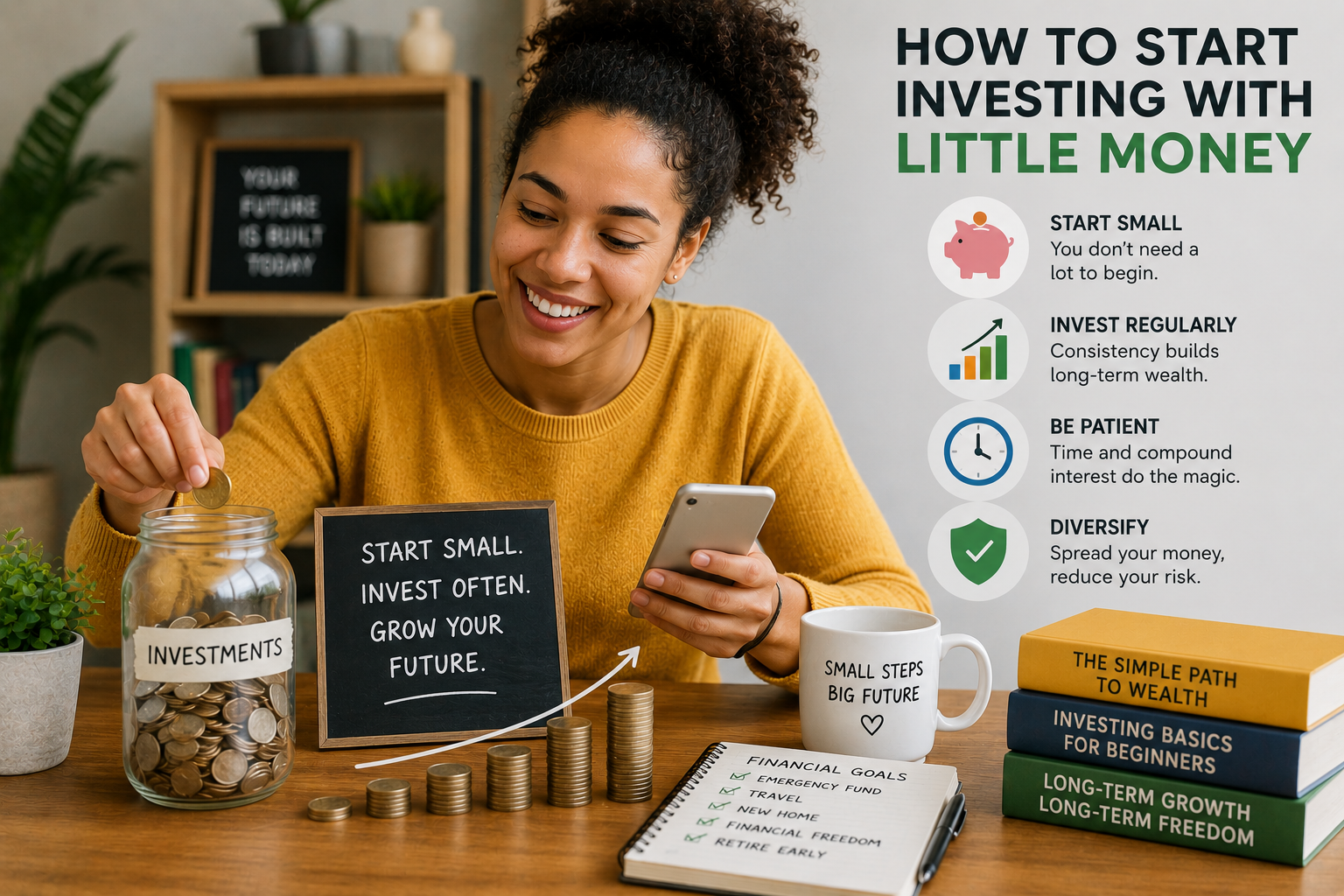
Many people believe investing is only for wealthy individuals or financial experts. This common misconception prevents countless beginners from taking the first step toward building long-term wealth. The truth is that investing is more accessible today than ever before, and you do not need a large amount of money to get started.
Modern technology, beginner-friendly investment platforms, and educational resources have made investing possible for people with very small budgets. Even modest investments made consistently over time can grow significantly through patience and compound growth.
Starting with little money may feel intimidating at first, but small beginnings can lead to meaningful financial progress. What matters most is developing the habit of investing regularly and learning how to make informed financial decisions.
This guide explains how beginners can start investing with little money while building confidence and healthy financial habits.
Why Investing Matters
Saving money is important, but investing offers opportunities for your money to grow over time.
When money sits in a regular savings account, growth is usually limited. Investing allows your money to potentially increase in value through assets such as:
- Stocks
- Bonds
- ETFs
- Mutual funds
- Retirement accounts
Investing can help support long-term goals such as:
- Retirement
- Financial independence
- Emergency savings growth
- Buying a home
- Building future wealth
The earlier you start investing, the more time your money has to grow.
You Do Not Need to Be Rich to Invest
One of the biggest myths about investing is that it requires thousands of dollars to begin.
Today, many investment platforms allow people to start investing with very small amounts.
Some platforms even offer:
- Fractional shares
- No minimum balances
- Automatic investing options
- Low-cost investment funds
This means beginners can often start investing with small monthly contributions.
Starting small is still far better than waiting for the “perfect” moment.
Build a Financial Foundation First
Before investing, it is important to create some financial stability.
Start by focusing on:
- Paying essential bills
- Creating a simple budget
- Building a small emergency fund
- Reducing high-interest debt
Investing while struggling with serious financial instability can create unnecessary stress.
A strong financial foundation helps support better long-term investment decisions.
Start With Small Amounts
Many beginners delay investing because they feel embarrassed about starting small.
However, successful investing is more about consistency than large initial investments.
Examples of small starting amounts include:
- $10 per week
- $25 per month
- Spare change investing
- Small automatic deposits
Even modest contributions can grow over time through compound growth and consistent investing habits.
The important thing is building momentum.
Understand Compound Growth
Compound growth is one of the most powerful concepts in investing.
Compounding happens when your investment earnings begin generating additional earnings.
For example:
- Investments grow
- Earnings stay invested
- Future earnings increase even more
Over many years, compound growth can significantly increase wealth.
Time is one of the greatest advantages beginner investors have.
Learn Basic Investment Types
Before investing, it is important to understand common investment options.
Stocks
Stocks represent ownership shares in companies.
Stock prices may rise or fall based on company performance and market conditions.
Stocks can provide long-term growth but also involve risk.
Bonds
Bonds are loans investors provide to governments or companies in exchange for interest payments.
Bonds are generally considered lower risk than stocks.
ETFs
Exchange-traded funds (ETFs) contain groups of investments and trade similarly to stocks.
ETFs often provide diversification and lower costs.
Mutual Funds
Mutual funds combine money from many investors into professionally managed investment portfolios.
These funds help beginners diversify investments more easily.
Understanding basic investment categories improves confidence and decision-making.
Choose Beginner-Friendly Investments
New investors often make the mistake of choosing overly complicated or risky investments.
Simple investments are usually best for beginners.
Popular beginner-friendly options include:
- Broad market ETFs
- Index funds
- Retirement accounts
- Diversified mutual funds
These investments often reduce risk by spreading money across multiple companies or assets.
Simplicity is often more effective than complexity for long-term investing.
Use Automatic Investing
Automatic investing makes building wealth easier and more consistent.
Many investment platforms allow users to schedule automatic contributions from bank accounts.
Benefits of automation include:
- Consistent investing habits
- Reduced emotional decisions
- Simpler money management
- Long-term discipline
Even small automatic contributions can create strong long-term results.
Avoid Trying to Get Rich Quickly
Many beginners are attracted to investments promising fast profits.
Unfortunately, high-risk “get rich quick” strategies often lead to losses.
Examples include:
- Speculative trading
- Viral investment trends
- Emotional stock picking
- Unverified online advice
Successful investing usually focuses on long-term consistency rather than quick profits.
Patience is one of the most valuable investing skills.
Learn About Risk
All investments involve some level of risk.
Risk means investments may temporarily lose value or fluctuate over time.
Understanding risk helps beginners make smarter decisions.
Generally:
- Higher returns often involve higher risk
- Lower-risk investments may provide slower growth
Long-term investing and diversification can help reduce overall risk exposure.
Diversify Your Investments
Diversification means spreading investments across multiple assets instead of relying on one investment alone.
Diversification may include:
- Different industries
- Domestic and international investments
- Stocks and bonds
- Multiple companies
Diversification helps reduce the impact of poor performance from any single investment.
It is one of the most important risk management strategies.
Start Learning Before Investing Large Amounts
Financial education is extremely valuable for beginner investors.
Take time to learn about:
- Investment basics
- Long-term strategies
- Market behavior
- Risk management
- Financial discipline
Helpful educational resources include:
- Books
- Financial websites
- Investment podcasts
- Beginner courses
Learning gradually builds confidence and reduces fear.
Avoid Emotional Investing
Many investment mistakes happen because of emotional decisions.
Fear may cause investors to sell during market declines, while excitement may encourage impulsive buying during market hype.
Successful investors focus on:
- Long-term goals
- Consistency
- Patience
- Research
Emotional reactions often damage investment performance.
Ignore Market Noise
Financial news and social media constantly discuss market movements.
This can create unnecessary stress for beginners.
Daily market fluctuations are normal and often temporary.
Long-term investors usually focus more on:
- Consistent contributions
- Diversification
- Long-term growth
rather than short-term market predictions.
Be Careful With Online Advice
The internet contains endless investing opinions, but not all advice is trustworthy.
Some online influencers promote risky investments or unrealistic expectations.
Always research carefully before investing money.
Reliable investing focuses on education and long-term principles rather than hype.
Use Retirement Accounts if Available
Retirement accounts are popular long-term investment tools.
Depending on your country, retirement accounts may offer:
- Tax advantages
- Employer contributions
- Long-term growth opportunities
Even small retirement contributions made consistently can grow substantially over time.
Retirement investing is one of the most common ways people build long-term wealth.
Track Your Progress
Monitoring investment progress can help maintain motivation.
However, avoid checking investments obsessively every day.
Short-term market changes are normal.
Instead, focus on:
- Consistent investing habits
- Long-term growth
- Financial goals
Patience and discipline usually matter more than daily performance.
Build Confidence Gradually
Many beginners feel nervous about investing because they fear making mistakes.
Confidence develops through:
- Education
- Experience
- Consistency
- Small successes
Starting with small amounts helps reduce pressure while building valuable experience.
No investor knows everything immediately.
Avoid Comparing Yourself to Others
Some people feel discouraged when comparing their investments to others.
Remember that everyone has different:
- Income levels
- Financial situations
- Goals
- Timelines
Focus on your own progress rather than competing with others.
Small consistent improvements matter greatly over time.
Understand That Investing Takes Time
Investing is not a fast process.
Building wealth usually requires:
- Patience
- Long-term thinking
- Consistency
- Discipline
Some years may bring stronger returns than others.
Temporary market declines are normal parts of investing.
Long-term investors generally benefit from staying patient during difficult periods.
Why Starting Small Still Matters
Many people underestimate how powerful small investments can become over time.
For example:
- Small monthly investments can compound for decades
- Consistent contributions build strong habits
- Early investing creates long-term opportunities
Waiting years to start investing may reduce the potential benefits of compound growth.
Small beginnings often lead to larger financial opportunities later.
Investing Is About Building a Better Future
Investing is not only about making money.
It also helps create:
- Financial security
- Greater independence
- Future flexibility
- Reduced financial stress
Building investments can improve confidence and create more opportunities over time.
Taking the First Step Toward Investing
Starting to invest with little money may feel challenging at first, but it is absolutely possible.
The most important thing is beginning with realistic expectations and a long-term mindset.
By learning basic investing principles, starting small, investing consistently, and avoiding emotional decisions, beginners can gradually build wealth and financial confidence over time.
You do not need to be rich to start investing. You simply need patience, discipline, and the willingness to take the first step toward a stronger financial future.