
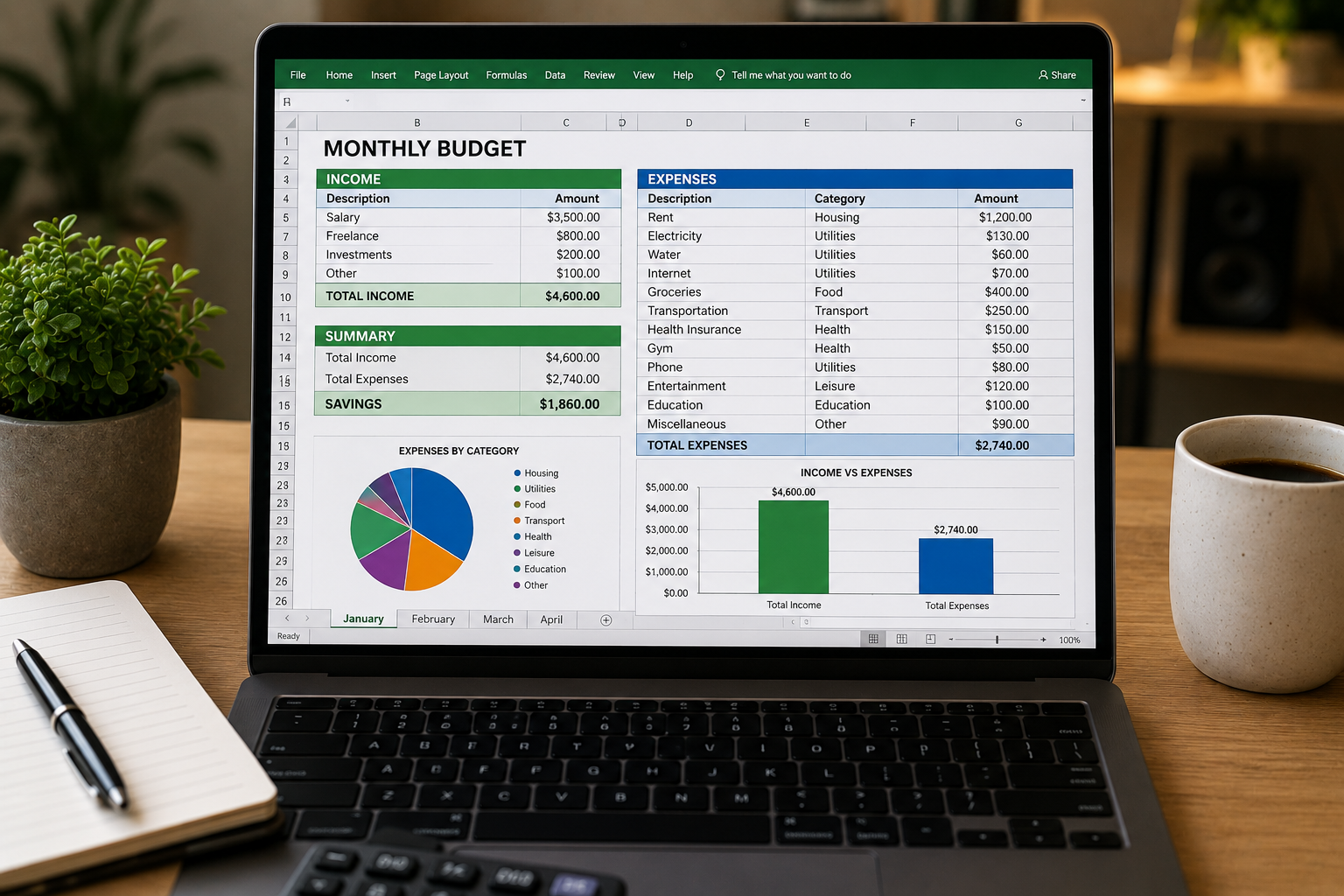
Managing monthly expenses can feel overwhelming, especially when bills, subscriptions, groceries, transportation, and unexpected costs all compete for your attention at the same time. Many people work hard every month but still struggle to understand where their money disappears.
The truth is that financial stress is often connected more to disorganization than to income itself. Even people with stable salaries may feel anxious when expenses are not properly tracked or planned. Learning how to organize your monthly expenses is one of the most important steps toward achieving financial stability and reducing money-related stress.
Good financial organization helps you make better decisions, avoid unnecessary debt, save more consistently, and create long-term security. The process does not need to be complicated. Small habits and simple systems can completely change the way you manage money over time.
Understand Your Financial Reality
Before organizing your expenses, you need a clear understanding of your current financial situation.
Many people avoid looking closely at their finances because it feels uncomfortable. However, awareness is essential for improvement.
Start by reviewing:
- Bank statements
- Credit card bills
- Utility bills
- Monthly subscriptions
- Loan payments
- Cash spending
Write down all your monthly expenses, even the small ones.
This process often reveals spending patterns you may not have noticed before. Small daily purchases can quietly become major monthly expenses over time.
The goal is not to judge yourself. It is simply to create clarity.
Financial organization begins with awareness.
Separate Fixed and Variable Expenses
One of the best ways to organize monthly expenses is dividing them into categories.
The two main categories are:
Fixed Expenses
These are expenses that usually remain the same every month, such as:
- Rent or mortgage
- Insurance
- Internet
- Phone bills
- Loan payments
- Subscription services
Fixed expenses are easier to predict and plan around.
Variable Expenses
These expenses change from month to month and may include:
- Groceries
- Transportation
- Entertainment
- Dining out
- Shopping
- Utilities
Variable expenses often offer the greatest opportunity for savings because they are more flexible.
Separating these categories helps you understand where adjustments can realistically be made.
Create a Monthly Budget
A budget gives structure to your financial life.
Without a budget, money tends to disappear without clear direction. A budget allows you to assign purpose to your income before spending happens.
A simple monthly budget should include:
- Total monthly income
- Fixed expenses
- Variable expenses
- Savings goals
- Emergency fund contributions
- Debt payments
Many people think budgeting removes freedom, but the opposite is often true. A good budget creates confidence because you know exactly what you can afford.
The key is making your budget realistic and sustainable.
If your budget feels too restrictive, it becomes difficult to maintain long term.
Prioritize Essential Expenses First
When organizing expenses, always focus on essentials before non-essential spending.
Priority expenses usually include:
- Housing
- Utilities
- Groceries
- Healthcare
- Transportation
- Insurance
These expenses support your basic daily life and financial stability.
After covering necessities, you can organize spending for entertainment, shopping, hobbies, and personal goals more effectively.
Prioritizing essentials reduces the risk of financial emergencies and late payments.
It also helps prevent emotional spending from interfering with important responsibilities.
Track Your Spending Consistently
One of the biggest reasons budgets fail is inconsistent tracking.
Many people create budgets but stop monitoring their spending after a few weeks. Financial organization requires regular attention.
Tracking expenses daily or weekly helps you:
- Stay aware of spending habits
- Avoid overspending
- Identify unnecessary expenses
- Adjust quickly when needed
- Improve financial discipline
You can track expenses using:
- Budgeting apps
- Spreadsheets
- Banking apps
- Financial notebooks
- Expense tracking tools
Choose a method that feels simple enough to maintain consistently.
Consistency matters more than perfection.
Build an Emergency Expense Category
Unexpected expenses happen to everyone.
Car repairs, medical bills, home maintenance, or temporary income changes can create major financial stress if you are unprepared.
One effective strategy is creating a specific category in your budget for unexpected costs.
Even small monthly contributions to an emergency fund can provide protection and peace of mind over time.
This habit helps prevent:
- Credit card debt
- Financial panic
- Missed payments
- Budget disruptions
Financial organization becomes much easier when emergencies no longer destroy your monthly plan.
Reduce Unnecessary Subscriptions
Subscriptions have become one of the easiest ways to lose track of monthly spending.
Streaming services, apps, memberships, software tools, and automatic renewals can quietly consume a significant portion of your income.
Review all recurring payments regularly and ask yourself:
- Do I still use this service?
- Does this subscription improve my life enough to justify the cost?
- Can I downgrade or cancel it?
Many people save hundreds of dollars yearly simply by removing unused subscriptions.
Small recurring expenses add up quickly over time.
Use Separate Accounts for Better Organization
Some people find financial organization easier by separating money into different accounts.
For example:
- One account for bills
- One account for spending
- One savings account
- One emergency fund account
This method creates clearer boundaries and reduces accidental overspending.
Automating transfers between accounts can also simplify money management significantly.
Financial systems that reduce decision-making often improve consistency and discipline.
Plan for Irregular Expenses
Many budgets fail because people forget about irregular expenses.
Expenses such as:
- Holidays
- Birthdays
- Annual insurance payments
- Car maintenance
- School supplies
- Travel
may not occur monthly, but they still affect your finances.
Instead of treating them as surprises, estimate these costs in advance and save gradually throughout the year.
Planning ahead reduces financial stress and helps maintain budget stability.
Preparation is one of the most powerful financial habits.
Avoid Emotional Spending
Emotions often influence spending more than people realize.
Stress, boredom, frustration, excitement, or social pressure can lead to impulsive purchases that damage financial progress.
Before making non-essential purchases, pause and ask yourself:
- Am I buying this because I truly need it?
- Is this purchase emotional?
- Will this still matter next week?
- Does this support my financial goals?
Creating awareness around emotional spending helps improve financial control significantly.
Financial organization is not only about numbers. It is also about behavior.
Schedule Regular Financial Reviews
Organizing expenses is not a one-time task.
Your financial situation changes over time, which means your system should adapt as well.
Set aside time each month to review:
- Spending habits
- Savings progress
- Budget performance
- Upcoming expenses
- Financial goals
Monthly financial reviews help you stay connected to your progress and make adjustments before problems become larger.
Even a short financial review can improve confidence and organization.
Focus on Long-Term Financial Habits
Financial organization is not about temporary perfection. It is about building sustainable habits.
Small consistent actions often create bigger results than dramatic short-term changes.
Examples of healthy financial habits include:
- Paying bills on time
- Saving regularly
- Tracking spending
- Planning purchases carefully
- Reviewing finances consistently
- Avoiding unnecessary debt
Over time, these habits create greater financial stability and reduce stress significantly.
Long-term consistency matters more than occasional perfection.
Use Financial Goals as Motivation
Organizing expenses becomes easier when you connect your money to meaningful goals.
Without goals, budgeting can feel restrictive or pointless.
Examples of motivating financial goals include:
- Building emergency savings
- Becoming debt-free
- Traveling
- Buying a home
- Starting a business
- Investing for retirement
- Achieving financial independence
Goals create purpose behind financial discipline.
They help transform budgeting from something restrictive into something empowering.
Why Financial Organization Improves Quality of Life
Money problems affect more than bank accounts. They also affect stress levels, relationships, sleep, productivity, and overall mental well-being.
Financial organization helps reduce uncertainty and create greater peace of mind.
When your expenses are organized, you are more likely to:
- Feel calmer about money
- Handle emergencies better
- Avoid debt problems
- Make confident decisions
- Build long-term stability
Financial clarity creates emotional relief.
You do not need to become wealthy overnight to improve your financial life. Better organization alone can make a major difference.
Building Better Financial Control
Organizing your monthly expenses is one of the most valuable financial skills you can develop. It helps you understand your habits, reduce stress, avoid unnecessary debt, and build a stronger financial future over time.
The process does not need to be complicated or perfect. Simple systems and small consistent habits can gradually transform your finances.
Start by understanding where your money goes, creating a realistic budget, and staying consistent with tracking your expenses.
Every small improvement creates momentum.
Over time, financial organization becomes less about restriction and more about confidence, stability, and freedom.