
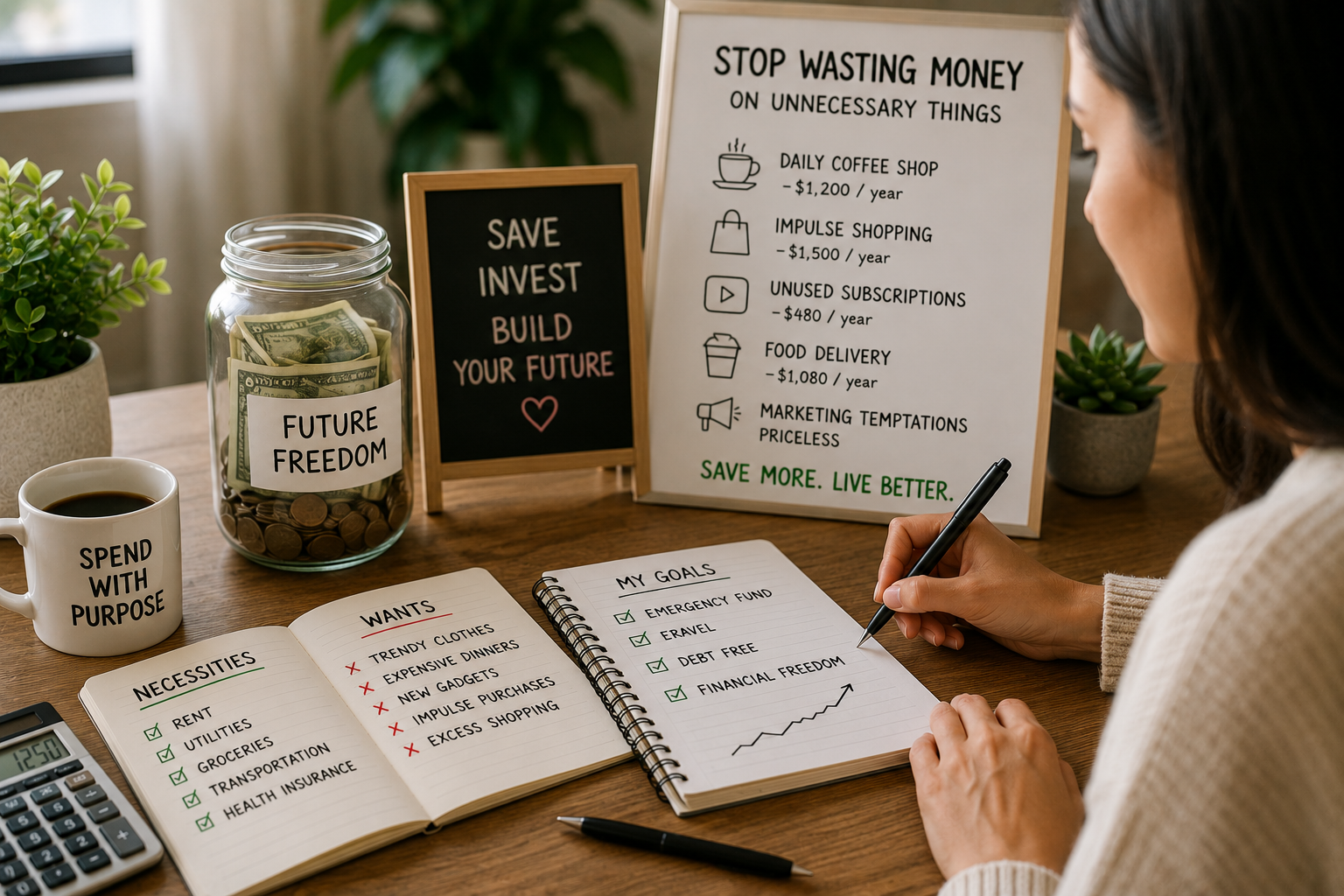
Many people work hard every month but still struggle to save money or improve their financial situation. Often, the problem is not only income — it is the habit of spending money on things that are unnecessary, impulsive, or emotionally driven.
Small unnecessary purchases may seem harmless at first, but over time they can create major financial problems. Daily convenience spending, impulse shopping, unused subscriptions, and emotional purchases quietly reduce your ability to save, invest, and build financial stability.
The good news is that stopping unnecessary spending does not mean removing all enjoyment from your life. It simply means becoming more intentional with your money and making choices that better support your long-term goals.
Learning how to reduce wasteful spending can improve your finances, reduce stress, and help create greater financial freedom over time.
Understand Why Unnecessary Spending Happens
Most unnecessary spending is emotional rather than logical.
People often spend money because of:
- Stress
- Boredom
- Anxiety
- Social pressure
- Convenience
- Instant gratification
Modern advertising and social media constantly encourage people to buy more, upgrade more, and spend more.
Many purchases happen automatically without careful thought.
Understanding the emotional reasons behind spending is one of the first steps toward building healthier financial habits.
Awareness creates better control.
Track Your Spending Habits
Many people underestimate how much money they spend on unnecessary items.
Small purchases such as:
- Coffee shop visits
- Food delivery
- Online shopping
- Streaming subscriptions
- Impulse purchases
can quietly consume hundreds or even thousands of dollars yearly.
Tracking your spending helps you identify patterns and understand where your money goes.
You can use:
- Budgeting apps
- Banking apps
- Spreadsheets
- Expense journals
The goal is not to judge yourself harshly.
The goal is clarity and awareness.
Once you understand your spending habits, it becomes easier to make intentional changes.
Separate Needs From Wants
One of the most important financial skills is learning the difference between needs and wants.
Needs include:
- Housing
- Groceries
- Transportation
- Healthcare
- Utilities
Wants include:
- Luxury items
- Frequent dining out
- Impulse shopping
- Expensive upgrades
- Entertainment purchases
This does not mean eliminating all enjoyable spending.
However, understanding the difference helps you prioritize more effectively and avoid unnecessary financial pressure.
Intentional spending creates better balance.
Avoid Emotional Shopping
Emotional spending is one of the biggest causes of unnecessary purchases.
People often shop to cope with emotions such as:
- Stress
- Sadness
- Frustration
- Loneliness
- Excitement
While buying something new may provide temporary satisfaction, emotional purchases often lead to regret later.
Before making non-essential purchases, ask yourself:
- Do I truly need this?
- Am I buying this emotionally?
- Will this matter next week?
- Does this support my financial goals?
Creating a pause before spending helps improve awareness and discipline.
Use the 24-Hour Rule
One simple strategy for reducing unnecessary spending is the 24-hour rule.
Instead of buying something immediately, wait at least one full day before making the purchase.
This pause helps reduce impulsive decisions and allows emotions to settle.
Often, people realize they no longer want the item after waiting.
For larger purchases, some people use longer waiting periods such as:
- 48 hours
- One week
- One month
Delaying purchases improves intentional decision-making.
Patience protects your finances.
Unsubscribe From Marketing Emails
Many unnecessary purchases begin with advertising.
Promotional emails, online ads, and social media marketing constantly encourage spending.
Simple changes can reduce temptation significantly, including:
- Unsubscribing from store emails
- Removing shopping apps
- Avoiding recreational online browsing
- Limiting social media shopping exposure
Reducing temptation makes financial discipline easier.
Your environment strongly affects spending behavior.
Small adjustments can create major long-term improvements.
Create a Realistic Budget
Budgeting helps control unnecessary spending because it gives your money clear direction.
Without a budget, it becomes easier to spend emotionally or impulsively.
A simple budget should include:
- Essential expenses
- Savings goals
- Debt payments
- Personal spending limits
The purpose of budgeting is not punishment.
It is creating awareness and helping you spend intentionally.
A realistic budget still allows room for enjoyment while protecting long-term financial goals.
Balance matters.
Avoid Shopping for Entertainment
Many people shop simply because they are bored.
Browsing online stores, visiting malls, or scrolling shopping apps often leads to purchases that were never truly necessary.
Instead of using shopping as entertainment, consider healthier alternatives such as:
- Reading
- Exercising
- Spending time outdoors
- Learning new skills
- Social activities
- Creative hobbies
Replacing shopping habits with meaningful activities reduces unnecessary spending and improves emotional well-being.
Review Your Subscriptions Regularly
Subscriptions are easy to forget because payments happen automatically.
Streaming services, memberships, apps, and digital platforms can quietly drain your finances every month.
Review your subscriptions regularly and ask:
- Do I still use this?
- Is this service worth the cost?
- Can I cancel or downgrade it?
Many people save significant amounts yearly simply by removing unused subscriptions.
Small recurring expenses become large over time.
Learn to Appreciate Delayed Gratification
Modern culture encourages instant satisfaction.
However, financial stability often depends on delayed gratification.
This means choosing long-term benefits instead of immediate temporary rewards.
Examples include:
- Saving instead of impulse buying
- Investing instead of overspending
- Paying off debt instead of upgrading lifestyle
- Planning purchases carefully
Delayed gratification strengthens financial discipline and improves long-term outcomes.
Patience creates financial growth.
Stop Trying to Impress Others
Social pressure often causes unnecessary spending.
People may buy expensive items to appear successful or fit in socially.
Examples include:
- Luxury clothing
- Expensive cars
- Frequent upgrades
- Trend-based purchases
Trying to impress others financially often creates debt and stress.
Real financial stability usually happens quietly through discipline and planning.
Focus on your own goals instead of external expectations.
Financial freedom matters more than appearances.
Build Savings Goals That Motivate You
Saving money becomes easier when connected to meaningful goals.
Instead of simply “spending less,” focus on what financial discipline can help you achieve.
Examples include:
- Emergency savings
- Travel
- Home ownership
- Financial independence
- Starting a business
- Family security
Meaningful goals create stronger emotional motivation.
When you understand why you are saving, unnecessary spending becomes easier to resist.
Goals create direction.
Understand the True Cost of Purchases
Before making purchases, think beyond the immediate price.
Ask yourself:
- How many work hours does this cost?
- Will I still value this later?
- Could this money support a more important goal?
- Is this purchase adding real value to my life?
This mindset encourages more intentional financial decisions.
Awareness helps reduce impulsive behavior.
Build Better Financial Habits Slowly
Trying to eliminate all unnecessary spending overnight usually becomes unsustainable.
Instead, focus on gradual improvements such as:
- Reducing impulse purchases
- Planning shopping trips
- Cooking at home more often
- Limiting online shopping
- Saving consistently
Small consistent habits create stronger long-term results than extreme temporary restrictions.
Financial improvement should feel sustainable.
Financial Freedom Comes From Intentional Choices
Every financial decision affects your future.
Unnecessary spending may feel small in the moment, but repeated habits shape long-term financial outcomes.
Reducing wasteful spending helps create:
- More savings
- Less stress
- Greater flexibility
- Better financial control
- More opportunities
Money becomes more powerful when used intentionally.
Financial freedom is often built through small disciplined choices repeated consistently over time.
Creating a Healthier Financial Life
Stopping unnecessary spending is not about becoming overly restrictive or never enjoying life. It is about becoming more aware of your habits and making choices that support your future goals instead of temporary emotions.
Small changes in spending behavior can create major long-term improvements in financial stability and peace of mind.
By tracking expenses, reducing impulse purchases, avoiding emotional spending, and focusing on intentional financial habits, you can gradually build a healthier and more secure relationship with money.
Every thoughtful financial decision strengthens your future freedom and stability.