
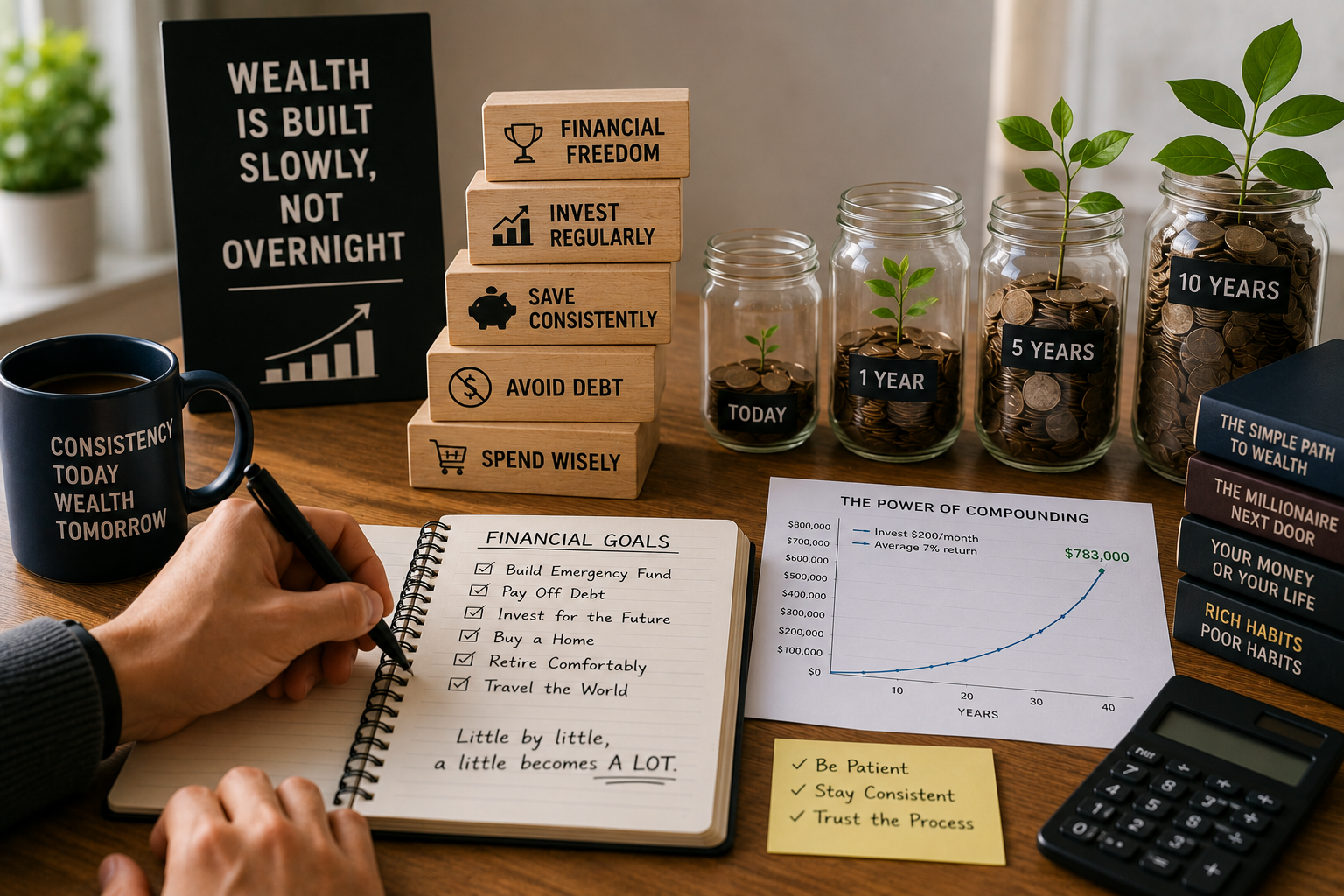
In a world filled with promises of instant success and quick money, many people become frustrated when financial growth feels slow. Social media often promotes luxury lifestyles, rapid wealth stories, and overnight success, creating unrealistic expectations about money and financial freedom.
The reality is that long-term financial stability is usually built slowly and consistently over time. True wealth rarely comes from luck alone or short-term excitement. It is most often created through discipline, patience, smart habits, and intentional financial decisions repeated consistently for many years.
Learning to build wealth gradually helps reduce stress, improve financial confidence, and create a more realistic and sustainable path toward financial security.
Why Many People Chase Quick Financial Results
Modern culture encourages instant gratification.
People constantly see advertisements and online content promoting:
- Fast money
- Instant success
- Luxury lifestyles
- Easy investing
- “Get rich quick” strategies
This creates the illusion that financial success should happen quickly.
As a result, many people become discouraged when:
- Savings grow slowly
- Debt repayment takes time
- Investments require patience
- Financial habits feel repetitive
Unfortunately, chasing shortcuts often leads to poor decisions, unnecessary risks, and financial disappointment.
Long-term consistency usually creates stronger and safer financial growth.
Wealth Is Often Built Through Habits
Many people think wealth depends only on income.
While income matters, financial habits are often even more important.
Examples of wealth-building habits include:
- Saving consistently
- Spending intentionally
- Investing regularly
- Avoiding unnecessary debt
- Budgeting carefully
- Planning for the future
These habits may seem small daily, but over time they create powerful financial outcomes.
Wealth is usually built gradually through repeated responsible behavior.
Consistency matters more than temporary motivation.
Small Financial Decisions Matter More Than Most People Think
People often underestimate the impact of small financial choices.
Examples include:
- Saving a little every month
- Reducing impulse purchases
- Investing regularly
- Paying debt consistently
- Avoiding lifestyle inflation
Individually, these actions may not feel dramatic.
However, over years, small decisions compound into major financial improvements.
Long-term financial growth is often the result of hundreds of responsible small decisions rather than one life-changing moment.
Patience creates momentum.
The Power of Compound Growth
One of the most important reasons slow wealth-building works is compound growth.
Compound growth happens when savings and investments continue generating growth over time.
The earlier someone starts saving and investing consistently, the more powerful long-term results can become.
Even modest contributions can grow significantly when given enough time.
This is why consistency matters so much.
Waiting for the “perfect time” to begin often delays valuable long-term progress.
Starting small is far more powerful than never starting at all.
Financial Discipline Creates Long-Term Results
Building wealth slowly requires discipline.
Motivation alone is rarely enough for long-term financial success.
Disciplined financial habits include:
- Following a budget
- Saving automatically
- Avoiding emotional spending
- Reviewing finances regularly
- Staying committed to goals
Discipline becomes especially important during difficult periods when financial progress feels slow.
People who continue making responsible decisions consistently usually create stronger long-term financial stability.
Small habits repeated consistently create powerful outcomes.
Avoiding Lifestyle Inflation Is Essential
Lifestyle inflation happens when spending increases every time income increases.
Without discipline, extra income often leads to:
- More expensive purchases
- Larger monthly expenses
- Increased financial pressure
- Reduced savings
Building wealth slowly often requires maintaining balance when income grows.
Instead of increasing spending immediately, financially disciplined people often choose to:
- Save more
- Invest consistently
- Build emergency funds
- Reduce debt
Controlling lifestyle inflation helps accelerate long-term wealth building.
Building Wealth Slowly Reduces Financial Stress
Quick financial success strategies often involve high risk, emotional pressure, or unrealistic expectations.
Slow and consistent financial growth usually creates greater emotional stability.
When people focus on gradual progress, they often experience:
- Less financial anxiety
- Better decision-making
- More realistic expectations
- Greater emotional control
Financial peace often comes from preparation and consistency rather than dramatic financial risks.
Stability creates confidence.
Long-Term Financial Thinking Improves Decisions
People who focus on long-term wealth building often make more intentional financial choices.
Before spending money, they may ask:
- Does this support my future goals?
- Is this purchase necessary?
- Could this money grow elsewhere?
- Am I spending emotionally?
Long-term thinking encourages patience and discipline.
It helps people prioritize future security over temporary satisfaction.
Intentional decisions create stronger financial outcomes over time.
Wealth Building Is Different for Everyone
There is no single definition of financial success.
Some people prioritize:
- Financial freedom
- Family stability
- Retirement security
- Travel opportunities
- Entrepreneurship
- Simplicity
Building wealth slowly allows people to create financial goals that align with their personal values instead of chasing external pressure or unrealistic comparisons.
Financial success should support your ideal lifestyle, not someone else’s expectations.
Emergency Savings Support Long-Term Growth
One important part of building wealth slowly is preparing for unexpected situations.
Emergency savings help protect financial progress during challenges such as:
- Medical expenses
- Job loss
- Car repairs
- Home maintenance
Without savings, emergencies often force people into debt or financial setbacks.
Preparation helps maintain long-term stability and prevents temporary problems from becoming major financial crises.
Financial resilience matters as much as financial growth.
Patience Is a Financial Skill
Many people underestimate how important patience is in personal finance.
Modern culture rewards speed and instant results, but financial growth often requires years of consistent effort.
Examples include:
- Paying off debt gradually
- Saving for major goals
- Investing long term
- Improving spending habits
- Building financial confidence
Patience allows healthy habits to create meaningful results over time.
Financial success is rarely immediate.
Consistency over many years usually matters far more than short-term intensity.
Avoid Comparing Your Progress to Others
Social comparison can damage financial motivation.
Social media often highlights luxury lifestyles and financial success stories without showing the reality behind them.
Comparing yourself to others can create:
- Discouragement
- Emotional spending
- Unrealistic expectations
- Financial pressure
Remember that every financial journey is different.
Focus on your own progress instead.
Building wealth slowly and steadily is still meaningful success.
Long-term consistency matters more than appearances.
Financial Education Supports Long-Term Growth
Learning about money helps improve wealth-building decisions significantly.
Important financial topics include:
- Budgeting
- Saving
- Investing
- Debt management
- Retirement planning
You do not need to become an expert immediately.
Even small learning habits create valuable long-term benefits.
Knowledge improves confidence and helps reduce costly financial mistakes.
Financial education strengthens long-term discipline.
Building Wealth Slowly Creates Stronger Habits
One major advantage of slow financial growth is that it encourages stronger habits.
People who gradually build wealth often develop:
- Better discipline
- More intentional spending
- Greater patience
- Healthier financial awareness
Quick financial success without strong habits can disappear quickly.
Strong habits create lasting stability.
Financial growth should feel sustainable, not temporary.
Focus on Progress Instead of Perfection
Many people become discouraged because they expect perfect financial behavior immediately.
However, building wealth is not about perfection.
There will always be:
- Unexpected expenses
- Financial mistakes
- Difficult months
- Learning experiences
The goal is consistent progress over time.
Even small improvements matter.
Saving regularly, reducing debt, and making intentional decisions gradually strengthen your financial future.
Wealth Is About More Than Money
True wealth includes more than large bank accounts.
It also includes:
- Peace of mind
- Financial security
- Freedom of choice
- Reduced stress
- Long-term stability
Building wealth slowly often creates healthier emotional relationships with money because success feels earned, stable, and sustainable.
Financial peace usually comes from preparation and consistency rather than chasing quick results.
Creating Long-Term Financial Stability
Building wealth slowly and consistently may not feel exciting every day, but it is one of the safest and most sustainable paths toward long-term financial security.
Small disciplined habits repeated over time create powerful financial results.
By saving consistently, investing patiently, avoiding unnecessary debt, controlling spending, and focusing on long-term goals, you can gradually build a stronger financial future.
Real financial growth is rarely about speed.
It is about consistency, patience, discipline, and intentional decisions that support your future year after year.